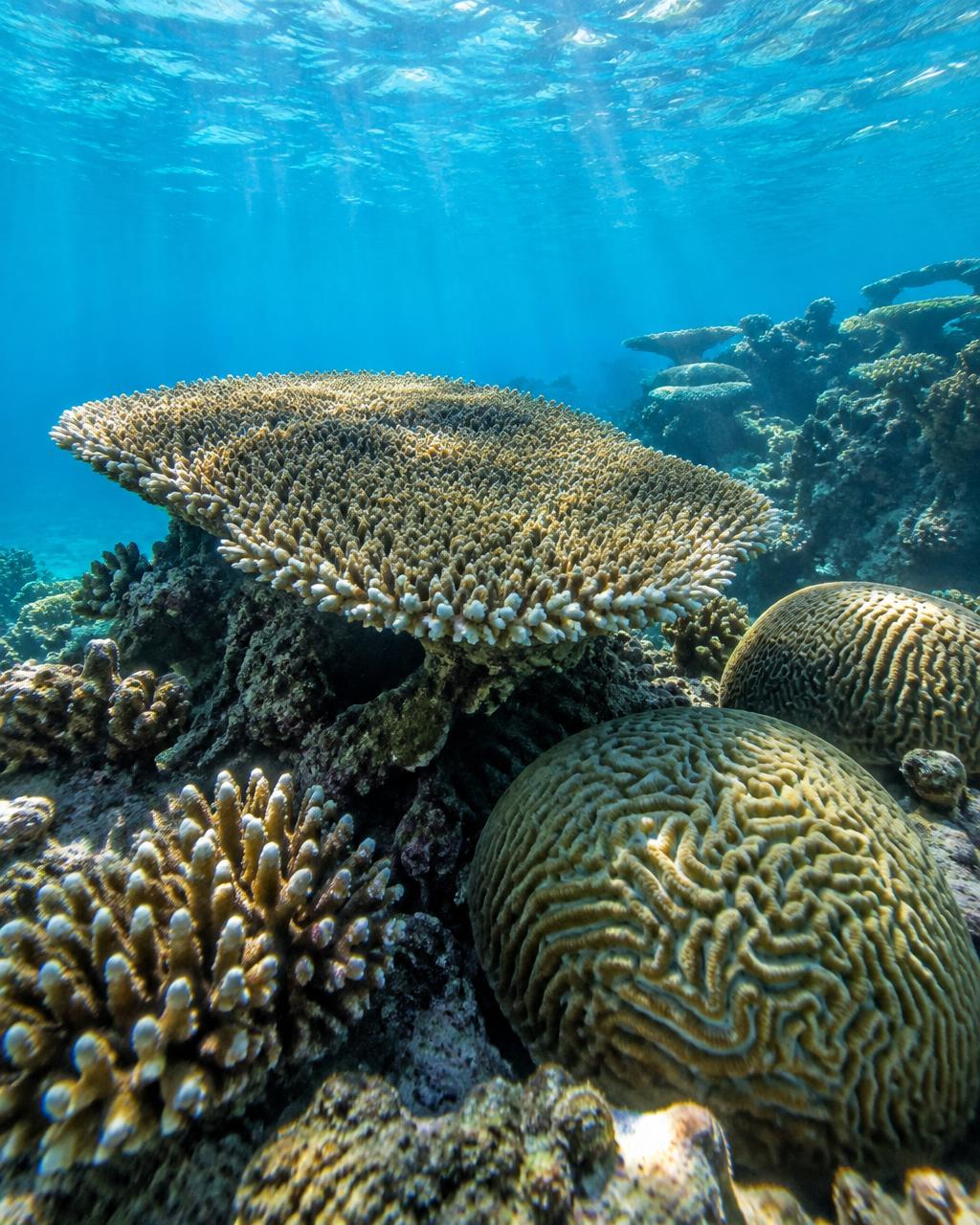
Coral
Raised from locally collected spawn for suitable reef restoration projects.
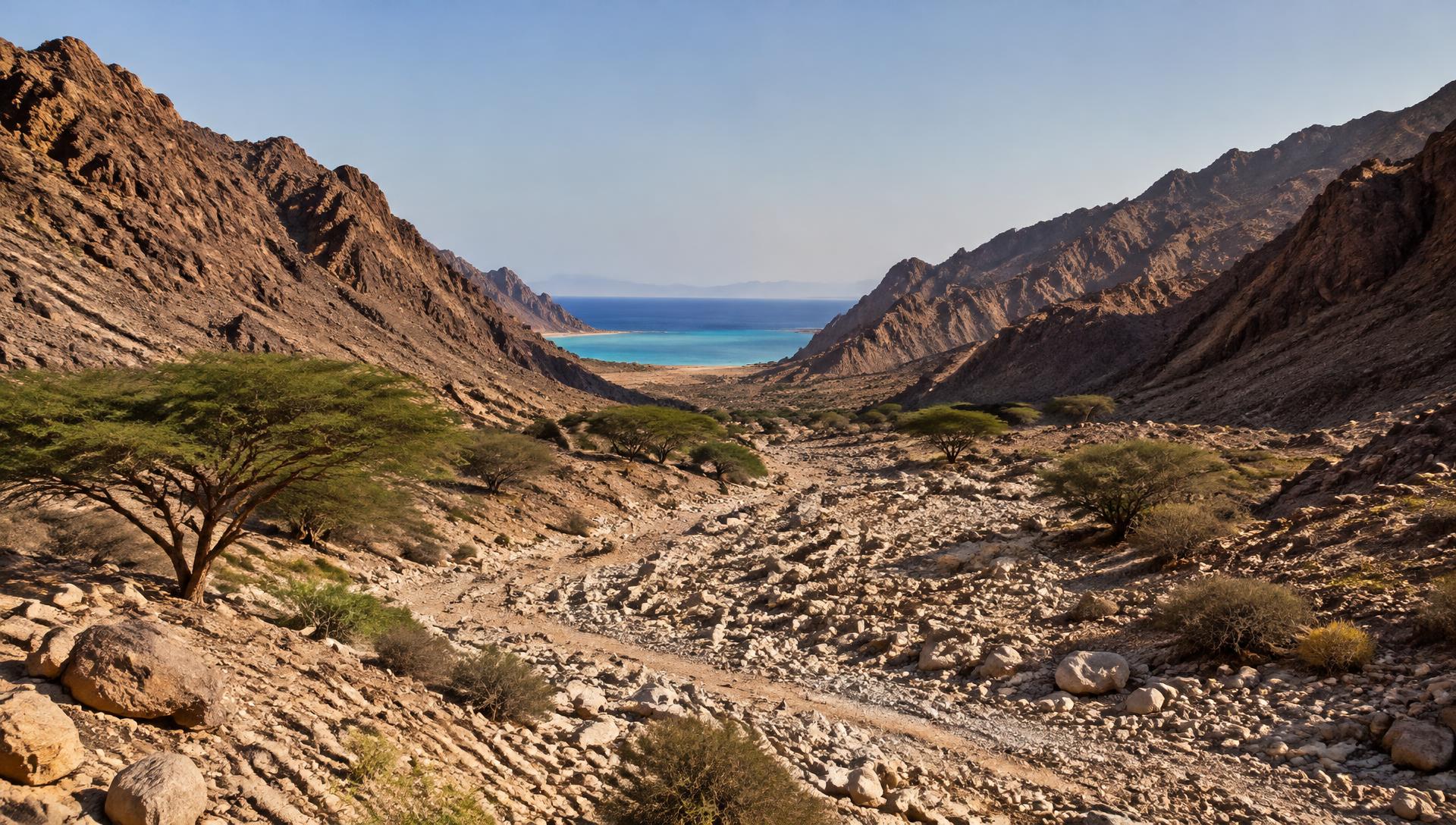
Our planned restoration farm will bring coral, mangroves and native plants together within one integrated production system, designed for the conditions of the southern Red Sea.
Planned · Not yet constructed
Why the farm exists
Restoring reefs, shorelines and native landscapes requires a reliable source of healthy, locally appropriate living stock.
Our farm is being designed to produce that stock ourselves, allowing us to support restoration projects from propagation through planting and long-term care.
Rather than operating separate nurseries, we aim to connect production through a system that makes better use of seawater, nutrients and recovered freshwater.
The water system
Our proposed integrated multi-trophic system is designed so that the resources leaving one stage can support the next.
Fig. 2 — Proposed farm, landscape section · not to scale
01
Marine ponds
Seawater enters ponds intended for shrimp and fish production. Water leaving the ponds contains nutrients that can support the next stages.
02
Mangroves and salicornia
Salt-tolerant plants use nutrients from the water as they grow.
03
Shellfish filtration
Native oysters and clams are intended to provide further filtration within the system.
04
Coral nursery
Water treated to the appropriate quality will support coral propagation and juvenile coral growth.
05
Water recovery
The proposed greenhouse will explore recovering freshwater from evaporation and condensation, alongside the collection of seasonal rainwater.
06
Native plant nursery
Recovered freshwater and collected rainwater will support native plant propagation and other suitable crops.
07
Salt production
Remaining saline water may be used for salt production as part of the farm's resource recovery system.
01
Marine ponds
Seawater enters ponds intended for shrimp and fish production. Water leaving the ponds contains nutrients that can support the next stages.
02
Mangroves and salicornia
Salt-tolerant plants use nutrients from the water as they grow.
03
Shellfish filtration
Native oysters and clams are intended to provide further filtration within the system.
04
Coral nursery
Water treated to the appropriate quality will support coral propagation and juvenile coral growth.
05
Water recovery
The proposed greenhouse will explore recovering freshwater from evaporation and condensation, alongside the collection of seasonal rainwater.
06
Native plant nursery
Recovered freshwater and collected rainwater will support native plant propagation and other suitable crops.
07
Salt production
Remaining saline water may be used for salt production as part of the farm's resource recovery system.
Proposed system. Engineering design, water quality and production stages will be tested and developed before full operation.
What we will grow
Raised from locally collected spawn for suitable reef restoration projects.
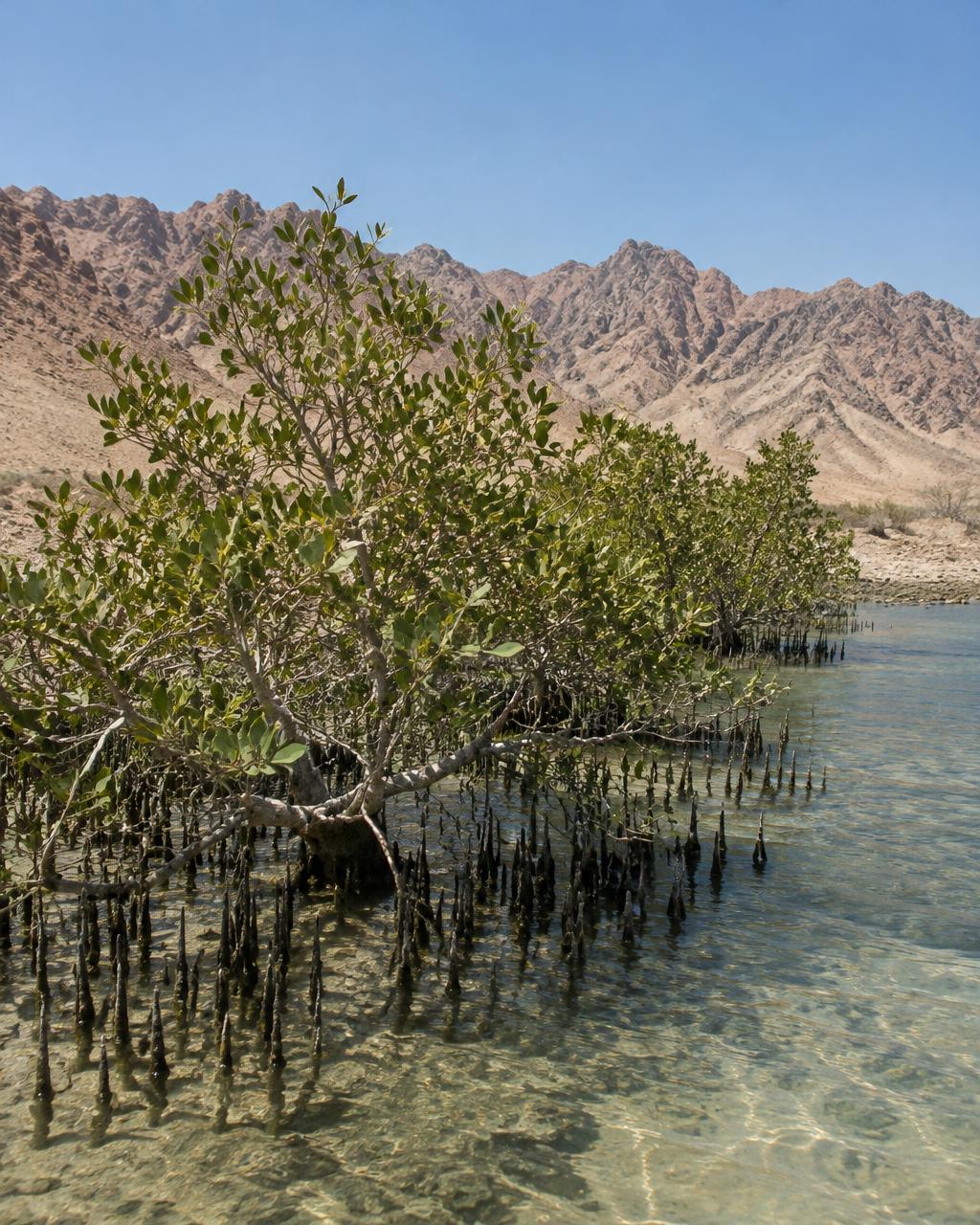
Native mangroves propagated for restoration of suitable shoreline habitats.
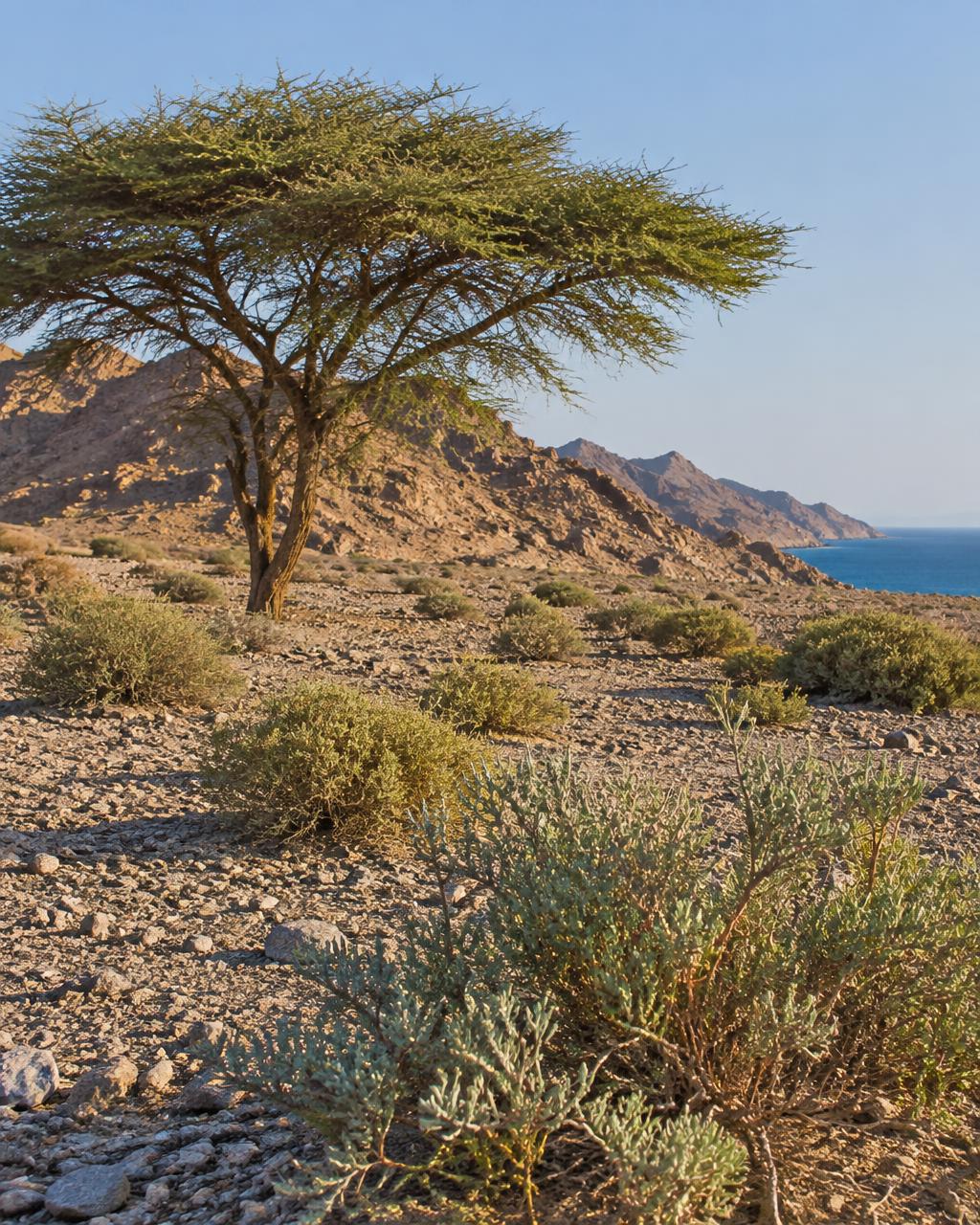
Trees, shrubs and groundcover adapted to the southern Red Sea's climate and ecosystems.
Additional farm production
Salicornia, seafood, shellfish, salt and seasonal crops intended to support the farm's operations.
Learning at the farm
Beyond producing restoration stock, we want the farm to become a place for practical education and research.
We plan to welcome schools, universities, researchers, local communities and visiting practitioners to learn about coral propagation, native plants, water systems and ecological restoration through hands-on experience.
Future programs may include field days, internships, research placements and working stays.
Our development plan
2027
We plan to begin coral and mangrove propagation at a host site, subject to the necessary permits and approvals.
2028
Our aim is to establish the permanent farm, develop the integrated water system and begin our first paid restoration projects.
2029
We aim to operate the farm and restoration services together, alongside education, research and supporting farm activities.
The farm is where our restoration work begins. Its purpose is to support the recovery of reefs, shorelines and native landscapes far beyond its boundaries.
Explore restoration →